
Moon Conspiracists, We're With You: The New Moon Landing Series Will Never Be as Good as the Original
After a 54-year hiatus, can Artemis recapture the magic without Stanley Kubrick, the Cold War, or the original cast?
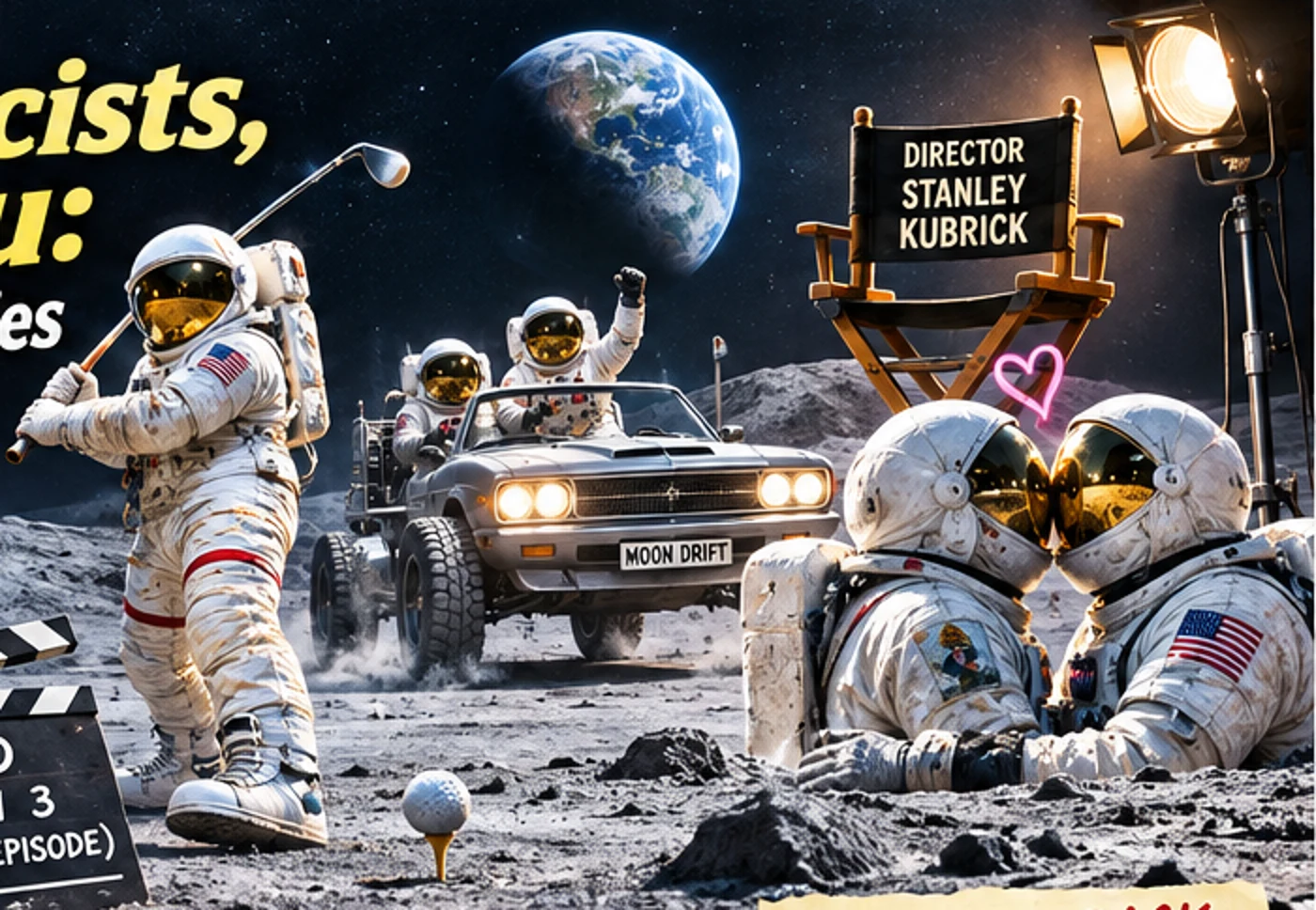
NASA is rebooting its most beloved franchise, and longtime fans are furious.
The original had Stanley Kubrick. It had the Cold War. It had a cast willing to spend eight days in a capsule without demanding an intimacy coordinator.
Moon landing conspiracy theorists have spent decades insisting the Apollo missions were an elaborate television production.
Fine.
Then explain why the reboot has an unlimited budget and still can't get the original director back.
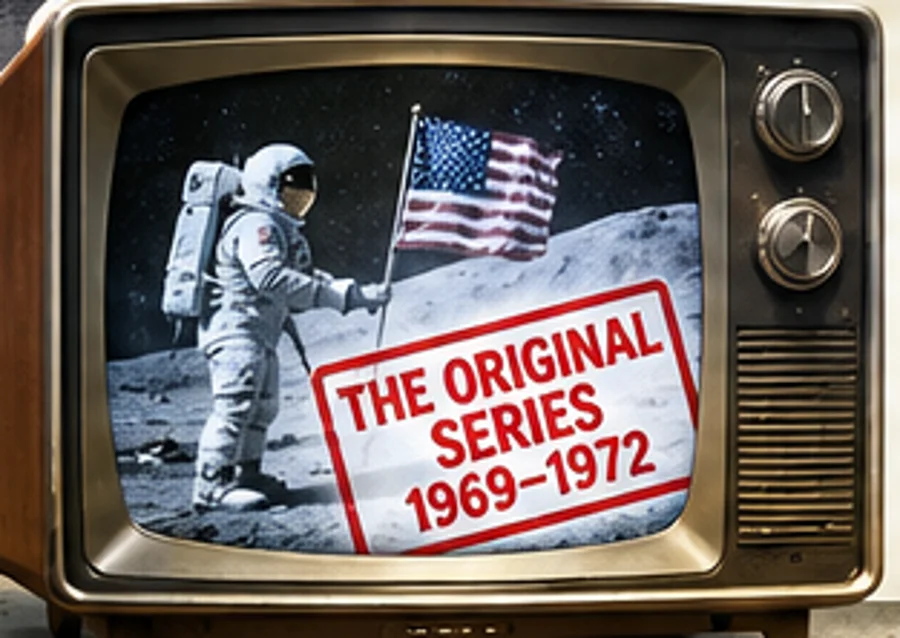
The original Apollo series was a cultural phenomenon. Six successful installments between 1969 and 1972, breathtaking special effects, an unforgettable cast, and a government so committed to the production that it convinced the entire world the show was real.
Six Seasons of Television History
Apollo 11 premiered in July 1969, starring Neil Armstrong, Buzz Aldrin, and Michael Collins, who spent most of the first episode alone in a spacecraft while his two costars received all the attention.
But the writers faced a problem. How many times could audiences watch men walk around a gray landscape collecting rocks?
Most critics agree the writers really hit their stride in Season 3 when they introduced golf.
By Season 4, they brought up a car.
Fast & Furious: Moon Drift.
A franchise that began with humanity confronting the unknown was now about middle-aged men driving somewhere to play golf.
Before the series got canceled ahead of Season 7, producers were reportedly pitching a progressive love interest to rival Kirk and Uhura.
The Notebook, with more radiation.
Two astronaut dudes French-pressing their space helmets together against a magnificent lunar sunset.
There were even discussions about introducing a Survivor theme.
“Buzz, the tribe has spoken. Please bring me your oxygen tank and go to the dark side.”
The format tested poorly with Buzz.
The series ended in December 1972. NASA would spend the next five decades producing spinoffs nobody particularly wanted, including Skylab, The Space Shuttle, and The International Space Station, an ambitious ensemble drama in which the entire cast was trapped in a building with no apparent plot.
The Kubrick Oscar Scandal
According to conspiracy theorists, Stanley Kubrick directed the original Apollo series, producing special effects so convincing that billions of people believed Americans had actually traveled to the moon.
And yet the Academy refused to recognize his work.
Not one Oscar for Best Director. Not one for Cinematography. Not even Best Production Design, despite building an entire moon in a warehouse.
Conspiracy theorists are still trying to locate the warehouse.
The Academy gave Best Picture to Midnight Cowboy, apparently deciding that two men wandering around New York City was a greater cinematic achievement than two men wandering around the moon.
Hollywood politics.
Modern filmmakers would simply use CGI.
Kubrick allegedly built the moon. Whole fucking thing. Eat that, Christopher Nolan.
And the conspiracy theorists are still finding continuity errors.
You Can't Recast the Cold War
The original series also benefited from one of television's greatest antagonists: the Soviet Union. The Cold War provided suspense, international intrigue, and a compelling reason for Americans to care about three men collecting rocks.
The Soviets were eventually written out of the franchise in 1991, leaving producers without a clear villain.
The Artemis reboot has introduced China as a potential rival, but longtime fans complain that the new antagonist feels derivative.
“It's basically the Soviet Union with a different wardrobe,” said one disappointed viewer. “At least give us somebody new. Maybe the moon.”
Some have suggested bringing back the Soviet Union using archival footage.
The Reboot Nobody Asked For
NASA promises the Artemis series will feature a new cast, cutting-edge technology, and production values unimaginable in 1969.
But bigger budgets and better special effects don't guarantee better entertainment. Just look at the 2015 remake of Point Break.
The original had Patrick Swayze, Keanu Reeves, Gary Busey, and surfing bank robbers.
The remake had people doing things outside.
Artemis faces a similar problem. Neil Armstrong was an iconic leading man. Buzz Aldrin brought charisma and unpredictability. Michael Collins was the guy everyone forgot was in the show until the credits rolled.
“The new footage looks fake,” complained one longtime fan who has spent 40 years arguing that the original footage was fake.
“But the old footage looked fake practically. You could tell somebody cared.”
The original featured grainy cinematography, suspicious shadows, and a flag that appeared to move in a vacuum.
Those weren't continuity errors. They were artistic choices.
The Moon Has Standards
NASA describes Artemis as a triumphant return after more than half a century.
The moon describes it as a man texting “you up?” after 54 years.
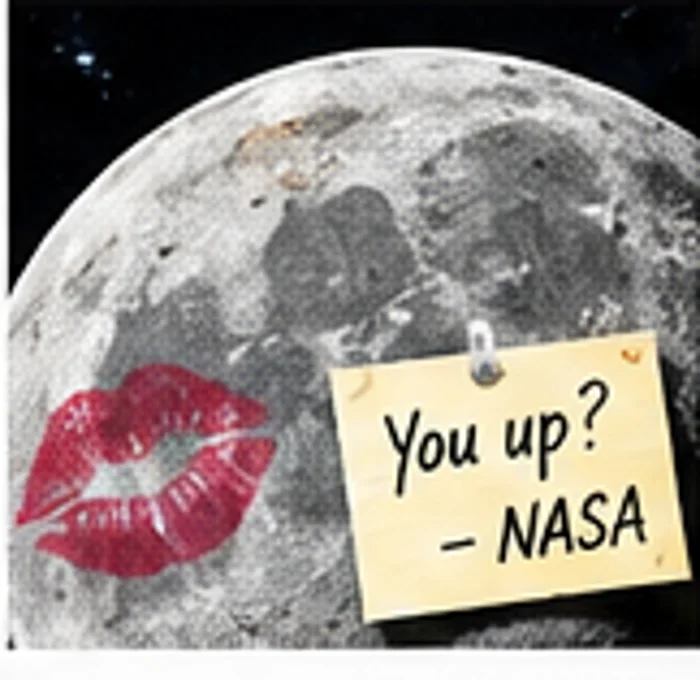
NASA remains confident, having spent most of that time telling people, “Baby, I rocked your world six times.”
The moon remembers it differently.
“Oh God, Neil, yes, you totally rocked my world. Sure, honey. Totally. Let me write about it in my diary.”
NASA has been quoting that review for 54 years.
Now it expects to show up with a younger cast and pick up exactly where things left off.
The moon deserves better.
At minimum, a phone call.
The Most Dedicated Fans in Television History
The greatest challenge facing Artemis isn't the budget, the casting, or even the absence of Kubrick.
It's the fans.
Moon landing conspiracy theorists have spent more than half a century studying the original's lighting, questioning its special effects, and searching every frame for mistakes.
They're the most dedicated television critics in America.
And like all devoted fans, they're prepared to hate the reboot before seeing a single frame.
“The new flag looks terrible,” complained one longtime viewer.
“Bring back the original wind.”